Views: 0 Author: Site Editor Publish Time: 2026-10-01 Origin: Site


Producing high-quality steel demands precise fluid flow control during continuous casting. You cannot rely on set-and-forget metrics to achieve flawless results. Plant managers and process engineers face a critical reality on the factory floor. You must move beyond basic OEM guidelines to achieve true operational excellence. Calibrating electromagnetic stirring (EMS) parameters—specifically frequency and current—is essential for continuous improvement. You must optimize these settings based on steel grade, section size, and casting speed. Doing so helps you eliminate centerline segregation and porosity effectively. This technical breakdown shows you how to evaluate, calibrate, and hardware-match EMS parameters. We explore how precise adjustments lead to verifiable metallurgical outcomes. You will learn to navigate the complexities of magnetic fields and Lorentz forces. Ultimately, mastering these variables transforms your continuous casting operation into a highly efficient, defect-free process.
Miscalibrated EMS settings create massive operational bottlenecks. They lead directly to high rejection rates and significant energy waste. Internal defects plague continuous casting operations when operators ignore fluid dynamics. V-segregation and internal bridging occur when parameters drift from optimal baselines. Bridging happens when dendrites meet prematurely during solidification. This blocks the necessary liquid feed, causing severe porosity in the final product. You need precise control over your stirring parameters to prevent these costly metallurgical failures.
An optimized EMS setup redefines your baseline success criteria. It maximizes the equiaxed crystal ratio across your product mix. Precise stirring refines the entire solidification structure from surface to core. At the same time, careful parameter control minimizes specific energy consumption. You achieve better steel quality without overloading your electrical grid. Efficiency and metallurgical excellence must go hand in hand.
The economic impact of accurate parameter control is substantial. Optimized magnetic fields translate directly into higher casting speeds. Faster casting means higher daily tonnage and better plant profitability. Furthermore, accurate control allows you to produce a broader range of high-carbon and alloy steels. You gain this operational flexibility without sacrificing internal soundness. Accurate parameter control directly boosts your overall plant output and market competitiveness.
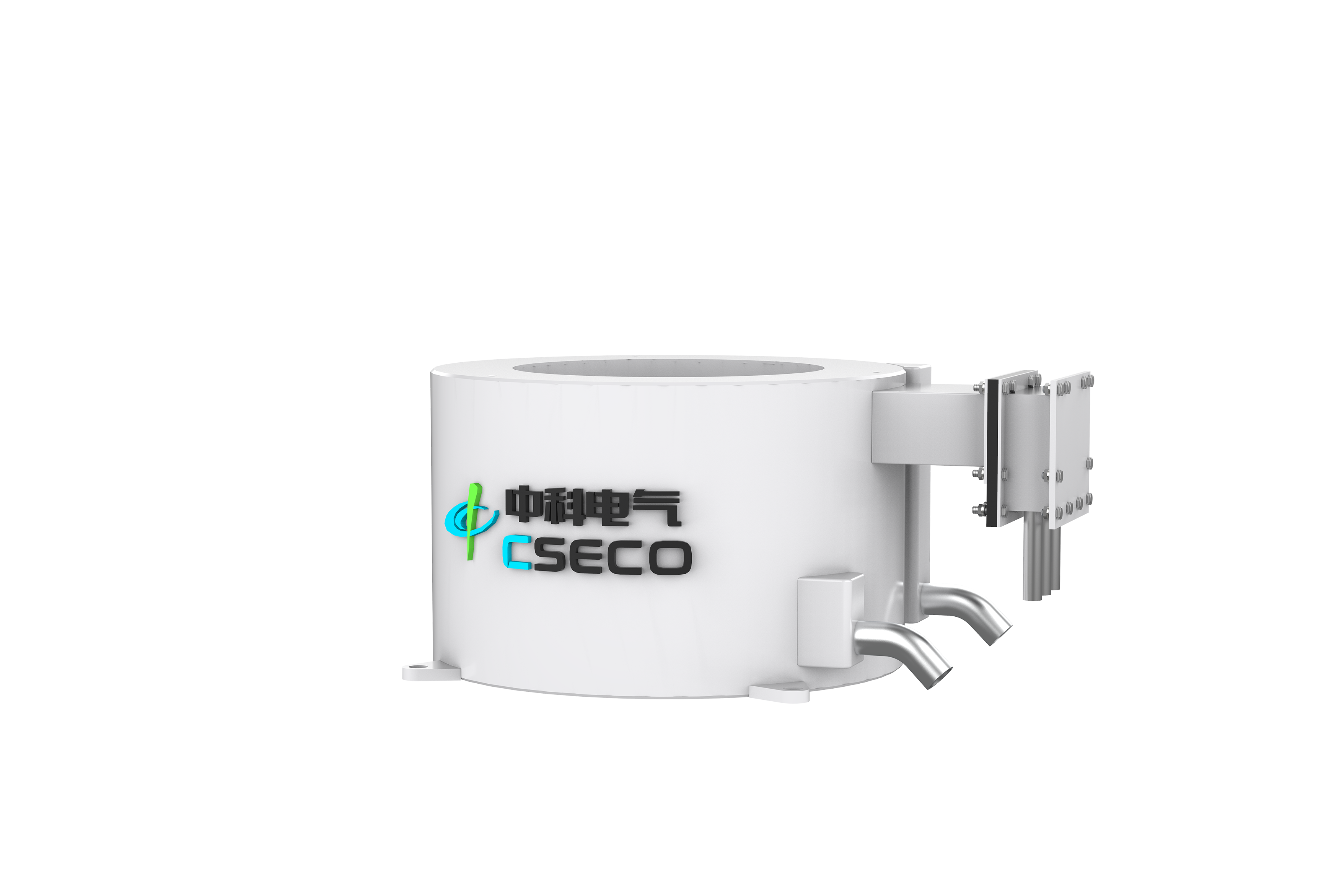
The physics of magnetic penetration relies entirely on the skin effect. Frequency shares an inverse relationship with magnetic field penetration depth. High frequencies concentrate magnetic energy near the surface of the conductive material. Conversely, low frequencies allow the magnetic field to reach deep into the liquid core. Standard grid power operates at 50 or 60 Hz. This frequency is practically useless for penetrating a thick, solidifying steel shell. You must manipulate frequency to dictate exactly where the stirring occurs within the strand.
Matching your frequency to the specific section size is non-negotiable. Different casting formats demand radically different approaches to fluid dynamics.
You must evaluate your current hardware carefully through this specific lens. Assess whether your equipment supports the frequency bandwidth required for your product mix. A limited variable frequency drive restricts your ability to cast advanced grades. If your system cannot drop below 5 Hz reliably, you will struggle to stir the core of large blooms. Upgrading your low-frequency converters often unlocks massive improvements in centerline quality.
Current settings dictate the overall magnetic flux density in your system. This flux density generates the Lorentz force within the liquid steel. The Lorentz force drives the actual physical rotation of the liquid pool. Higher current means faster fluid velocity. You need sufficient velocity to shear off growing dendrite arms. This shearing action promotes new grain nucleation and creates a fine, equiaxed structure.
However, pushing current too high introduces severe "over-stirring" risks. You must understand the limits of high current applications. Aggressive fluid velocity causes negative segregation, commonly known as white bands. Solute-depleted liquid washes over the solidification front, leaving distinct, weak rings in the final product. High current also creates dangerous meniscus turbulence in mold applications. This turbulence increases the risk of mold powder entrainment. Entrained slag ruins the surface quality and forces costly downstream conditioning.
You need a clear optimization matrix to balance these forces safely. Establish a precise current-to-casting-speed ratio for every grade you produce. Higher casting speeds generally require higher stirring intensity. The liquid pool is deeper, and solidification happens much faster. However, you must cap this intensity based on steel grade sensitivity. High-carbon steels are notoriously sensitive to aggressive flow changes. You must dial in the current to break dendrites without washing away essential solutes.
Follow these steps to establish your optimal current matrix:
Optimization Matrix: General EMS Parameters by Section Size
| Casting Format | Typical Frequency (Hz) | Current Intensity Goal | Primary Metallurgical Target |
|---|---|---|---|
| Large Bloom | 1.5 - 3.0 Hz | High | Core equiaxed crystal growth |
| Standard Billet | 3.0 - 6.0 Hz | Medium-High | Eliminate centerline segregation |
| Thin Slab | 4.0 - 8.0 Hz | Medium | Surface quality, wash particles |
Computational fluid dynamics (CFD) and magnetohydrodynamic (MHD) modeling play crucial roles today. Tools like THERCAST help you simulate complex fluid flow and thermal distribution. They are excellent platforms for particle tracking and baseline parameter estimation. Simulation software gives engineers a safe sandbox to test extreme settings. You can visualize the Lorentz force vectors before you ever strike an arc in the plant.
Yet, implementation realities often diverge sharply from ideal mathematical simulations. You face incredibly harsh casting environments on the factory floor. Mold copper tube attenuation weakens the actual magnetic field significantly. Coil degradation occurs over time due to constant thermal stress. Furthermore, steel conductivity varies dramatically as the temperature drops during solidification. Standard models often struggle to account for these dynamic, real-world variables accurately.
Adoption risks are high if you rely solely on software predictions. Applying literature-based parameters directly without site-specific testing is dangerous. You must conduct rigorous empirical testing to validate your models. Use sulfur prints and macroetching to verify the internal structure. Iterative adjustments on the factory floor bridge the gap between simulation and reality. Let the software guide your starting point, but let the macroetch results dictate your final production recipe.
Procuring new hardware requires strict technical scrutiny. When evaluating a metallurgical electromagnetic stirrer, focus heavily on fundamental specifications. Look closely at low-frequency waveform quality. Harmonic distortion limits must be highly stringent to prevent excessive heating in the copper mold. Coil insulation durability is absolutely paramount. Always demand Class H or Class C insulation. These premium insulation grades withstand severe radiant heat and protect against sudden coolant failures.
Control system flexibility represents another critical evaluation factor. You need advanced PLC and VFD combinations for modern casting. These systems allow for programmable, grade-specific recipe management. Manual dials and analog controls belong in the past. You need digital precision to adjust parameters on the fly. Advanced VFDs handle dynamic shifts between continuous and intermittent stirring modes seamlessly.
Vendor validation remains the final, crucial step in procurement. Do not blindly trust OEM marketing claims. Demand actual pilot data before signing any contracts. Ask for macrostructure comparisons showing stirred versus unstirred results from similar plants. Request references detailing long-term coil lifespan under high-amperage conditions. A reliable metallurgical electromagnetic stirrer must maintain consistent flux density over years of heavy operation. Rigorous vendor vetting ensures you purchase a solution, not just raw hardware.
Mastering electromagnetic stirring requires balancing two distinct physical forces. Frequency dictates exactly where the stirring happens within the liquid pool. Current dictates exactly how hard the magnetic field stirs the molten steel. You must harmonize both variables to achieve true metallurgical excellence. Plant managers cannot rely on default settings to cast highly sensitive alloy grades.
Your actionable next step is clear and immediate. We recommend conducting a comprehensive process audit of your current EMS parameters. Compare your VFD setpoints directly against your actual macrostructure defect logs. Do this before investing heavily in hardware upgrades or expensive new modeling software. Data-driven adjustments often unlock massive hidden potential in your existing equipment. Optimize your baseline first, and your continuous casting quality will improve dramatically.
A: Due to the skin effect, the magnetic field will fail to penetrate deeply into the liquid core. This results in weak internal stirring, poor equiaxed zone formation, and wasted energy. The stirring force remains localized entirely at the surface or within the copper mold itself.
A: High-carbon steels are highly sensitive to centerline segregation. You should evaluate current empirically. Start at a baseline computational model, then adjust downward. You want to find the minimum threshold that breaks dendritic growth without causing severe white bands in the final product.
A: Yes. Leading systems utilize advanced low-frequency converters and multiphase power supplies. These systems provide dynamic, adjustable frequency ranges—typically from 1 to 10 Hz. This flexibility allows operators to tailor settings to different casting formats and steel grades on the exact same strand.