Views: 0 Author: Site Editor Publish Time: 2026-08-28 Origin: Site


In modern steelmaking and continuous casting, metal melt uniformity is not just a technical preference. It is a basic requirement for stable quality, smoother downstream processing, and better final product performance. When molten steel is not uniform, problems can appear in several forms, including segregation, uneven solidification, internal defects, inconsistent structure, and surface quality issues. That is why an electromagnetic stirrer has become an important part of many metallurgical production lines.
From our perspective, the value of an electromagnetic stirrer is not limited to adding motion to molten metal. Its real value lies in how that motion improves thermal balance, supports more uniform material migration, and changes the solidification environment in a way that benefits structure and quality. In continuous casting, electromagnetic stirring is widely used to improve steel quality and support more stable production, with applications at different positions such as mold, strand, and final stirring depending on the metallurgical objective.
Metal melt uniformity affects what happens both before and during solidification. If temperature distribution is uneven, or if alloying elements and inclusions do not remain properly dispersed, the metal may solidify in a less controlled way. This can lead to coarse structure in one area, segregation in another, or defects that only become visible later during rolling, machining, or final use.
For manufacturers, this means metal melt uniformity has a direct connection to product quality and production efficiency. Better uniformity helps support a more stable casting process, while poor uniformity increases the risk of internal defects, inconsistent mechanical properties, and reduced yield.
When people hear the term uniformity, they often think only about chemical composition. In practice, it also includes thermal uniformity, fluid flow behavior, and solidification consistency. Molten steel can have local variations in temperature and solute distribution, especially during continuous casting. These differences influence how crystals form and grow.
A more uniform molten metal environment helps reduce the conditions that create severe segregation or unstable solidification fronts. This is one reason electromagnetic stirring has become so valuable in metallurgical control.
An electromagnetic stirrer creates a magnetic field that generates stirring force in the molten metal. Its working principle is not simply mechanical mixing. Instead, it changes the dynamic conditions during solidification, influences heat distribution, and improves the migration of material in the molten pool so that components become more uniform.
This is the key reason an electromagnetic stirrer improves metal melt uniformity. It does not simply move the molten metal in a general sense. It changes the flow and solidification conditions in ways that help the melt and the forming structure become more balanced.
The improvement in uniformity comes from several linked effects rather than one single action.
During solidification, stirring helps reduce local concentration differences by encouraging the molten metal to move more actively instead of remaining stagnant in certain areas. This matters because segregation often develops when certain elements or impurities concentrate in specific zones as solidification progresses. A more active molten pool can reduce the severity of this effect.
Electromagnetic stirring also changes thermal conditions during solidification. When flow within the molten region becomes more controlled and more active, heat distribution becomes less localized. This supports a more balanced solidification process.
A better thermal balance helps prevent situations where one area cools and solidifies very differently from another. That kind of stabilization is important for improving both internal structure and external quality.
Strong electromagnetic stirring can encourage the formation of dendrite fragments, which then act as nuclei for equiaxed grains. This helps inhibit excessive dendrite growth and supports grain multiplication. A finer and more equiaxed structure is usually associated with better internal consistency and more uniform casting quality.
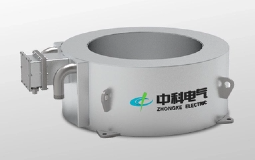
Electromagnetic stirring used in continuous casting can generally be divided according to position, including mold stirring, strand stirring, and final stirring. This matters because metal melt uniformity is not exactly the same at every stage of casting. The flow and solidification behavior in the mold is different from the behavior later in the strand or near final solidification.
At the mold stage, the focus is often on early solidification behavior, surface quality, grain refinement, and the reduction of pinholes and blowholes. This stage is important because it influences how the shell forms and how the initial structure develops.
Further along the strand, the purpose may shift toward improving internal quality, reducing central cracks, and lowering center segregation and center shrinkage. These are issues directly tied to the internal uniformity of the cast strand.
Final stirring is more closely associated with center area solidification behavior, V-segregation reduction, and central porosity reduction. This makes it especially relevant where final internal soundness is a major concern.
When electromagnetic stirring improves uniformity, the results are visible in several practical areas.
Electromagnetic stirring helps support better steel quality by improving the balance of the molten metal and the stability of solidification. When the process is properly matched to the casting line, it can improve both surface and subsurface quality as well as internal soundness.
Internal soundness is a major advantage because many casting problems do not show clearly at the surface. Central porosity, centerline segregation, V-segregation, and internal cracks can reduce downstream reliability and product value. Electromagnetic stirring helps reduce the risk of these issues by improving the metallurgical environment during solidification.
Better control of the melt and solidification process can support more stable casting conditions. In some applications, this may also help manufacturers maintain better production rhythm and improve operating efficiency.
Function of Electromagnetic Stirring | Effect on Metal Melt Uniformity | Practical Metallurgical Benefit |
Changes flow conditions in molten steel | Reduces stagnant zones and improves melt movement | Better component distribution |
Changes thermal conditions during solidification | Supports more even heat distribution | More stable solidification behavior |
Improves material migration conditions | Helps make components more uniform | Lower segregation tendency |
Generates dendrite fragments as nuclei | Encourages equiaxed grain formation | Grain refinement |
Inhibits dendrite growth | Reduces overly directional solidification structure | Better internal consistency |
Applied at mold, strand, or final position | Targets different stages of casting quality control | Better surface and internal soundness |
An electromagnetic stirrer is not only a coil installed near the casting zone. In practical production, it is part of a broader system that includes the electromagnetic device itself, electrical control equipment, cooling systems, and monitoring components. Melt uniformity improvement depends not only on the principle of stirring, but also on stable system execution.
If the electromagnetic field is not controlled properly, stirring performance will not remain stable. That is why the electrical and control side of the system is as important as the metallurgical idea itself.
In continuous industrial operation, reliable cooling and monitoring support long service life, stable magnetic field output, and better day-to-day consistency. These practical features matter because electromagnetic stirring usually operates in demanding production conditions.
In our view, selecting an electromagnetic stirrer should begin with the real metallurgical goal. Some lines need more help with surface quality and grain refinement. Others are more concerned with center segregation, porosity, or shrinkage. Because different EMS types and positions are used for different effects, the selection process should be based on casting stage, defect profile, and product quality target rather than only on basic equipment parameters.
It is also sensible to look at system integration, cooling, power supply design, monitoring capability, and after-sales support when evaluating a supplier.
How an electromagnetic stirrer improves metal melt uniformity can be understood in a practical way: it changes flow, heat transfer, and solidification conditions so the molten steel becomes more balanced and the cast structure becomes more uniform. By promoting more even component distribution, refining grain structure, and reducing the conditions that lead to segregation and internal defects, electromagnetic stirring supports better casting quality and more stable metallurgical performance.
For manufacturers looking at metal melt uniformity not as an abstract theory but as a real production requirement, electromagnetic stirring is a serious process tool. When the equipment is matched correctly to the casting stage and metallurgical objective, it can contribute to more uniform components, better solidification structure, and more reliable casting results. If you want to learn more about this type of solution in practical terms, Hunan Zhongke Electric Co., Ltd. is worth contacting for further information and discussion.
Q: How does an electromagnetic stirrer improve metal melt uniformity?
A: An electromagnetic stirrer improves metal melt uniformity by changing flow conditions, thermal conditions, and material migration during solidification, helping make the molten steel and forming structure more even.
Q: Why is grain refinement important in electromagnetic stirring?
A: Grain refinement matters because electromagnetic stirring can promote equiaxed grain formation and inhibit excessive dendrite growth, which supports a more uniform solidification structure.
Q: What casting quality problems can electromagnetic stirring help reduce?
A: Electromagnetic stirring can help reduce segregation, central porosity, center shrinkage, internal cracks, pinholes, blowholes, and other quality problems related to unstable solidification.
Q: Why is electromagnetic stirring valuable in continuous casting?
A: Electromagnetic stirring is valuable in continuous casting because it improves melt uniformity, supports better internal soundness, refines structure, and helps create more stable casting conditions.