Views: 0 Author: Site Editor Publish Time: 2026-08-21 Origin: Site


In modern industrial handling, lifting electromagnets are not simply accessories for moving steel. They are critical working tools that directly affect safety, efficiency, material control, and operating continuity. In steel plants, warehouses, docks, fabrication lines, and scrap handling yards, the wrong lifting electromagnet can lead to unstable lifting, lower productivity, excessive maintenance, or unnecessary operating risk. That is why selecting a reliable lifting electromagnet deserves careful technical and practical evaluation rather than a quick price comparison.
From our perspective, reliability in lifting electromagnets is not defined by one specification alone. It comes from a combination of magnetic performance, structural design, insulation quality, application matching, and operating stability. Hunan Zhongke Electric Co., Ltd. offers lifting electromagnets designed for different industrial handling needs, with applications including loading and unloading, transportation, warehouses, and docks, as well as use cases for steel plates, rebars, coiled strips, ingots, and steel scrap.
In industrial environments, lifting tasks are rarely simple. Materials may be heavy, hot, irregular, bent, deformed, stacked, or processed in high-cycle operations. A lifting electromagnet must work predictably under these conditions. If magnetic force is weak, poorly distributed, or inconsistent, the equipment may struggle to lift safely or release accurately. If the internal coil system or sealing design is weak, long-term reliability may suffer in demanding environments.
For buyers, this means the selection process should focus not only on whether the electromagnet can lift material once, but whether it can do so safely, repeatedly, and efficiently over time.
The first step in selecting reliable lifting electromagnets for industrial use is understanding exactly what material will be handled. Not all steel products behave the same during magnetic lifting. Steel plates, coiled strip, billets, rails, tubes, ingots, rebar bundles, and scrap all require different lifting behavior.
Flat steel plates usually need stable contact and balanced magnetic distribution across the lifting surface. Scrap, by contrast, is irregular and may require deeper magnetic penetration and stronger attraction to gather loose or uneven material. Coiled strip and slabs need a magnet that matches their geometry and weight distribution. When the material type is clearly understood, the electromagnet can be selected more accurately.
Lifting magnets can be used to lift either single pieces or multiple pieces of steel materials. This matters because industrial users often need precise control, not just maximum force. A magnet suited to controlled plate separation may not be the same as one optimized for bulk scrap handling.
One of the most obvious factors in selecting lifting electromagnets is lifting capacity, but capacity should be evaluated in real operating conditions, not only by nominal numbers.
A larger capacity figure is not automatically better if the magnet is oversized for the crane, mismatched to the material, or less efficient for the required lifting pattern. The right choice is the one that provides enough safe working performance while fitting the actual production task.
In many factories and yards, productivity depends on how quickly and stably material can be lifted, moved, and released. A reliable lifting electromagnet should support safe handling without repeated repositioning or unstable pickup. This is one reason why deep magnetic permeability and strong absorption matter in real production.
A lifting electromagnet may have strong force on paper, but if the magnetic field is uneven, real lifting quality can still be poor. Even field distribution is especially important when steel plates are bent or deformed.
If one area of the load receives much more holding force than another, the material may tilt, shift, or become harder to control during transport. Even field distribution improves stability and helps reduce handling risk.
Bent plates or irregular pieces are common in industrial use. A reliable lifting electromagnet should still perform well when the workpiece is not in ideal condition.
Reliability is not only about lifting force. It is also about how the electromagnet survives demanding daily use. Good insulation, strong pressure resistance, effective internal heat conduction, and a sealed structure all support longer service life.
The coil is central to the electromagnet’s function. If insulation quality is poor, long-term operation may become less stable, especially in high-duty industrial environments. Good insulation helps support electrical safety and service life.
Industrial lifting environments can include dust, vibration, impact, moisture, and temperature stress. A fully sealed structure can help protect internal components and improve durability in harsh working conditions. This should be part of any serious selection review.
Many buyers focus on lifting force but underestimate the importance of controlled release. In real industrial work, being able to accurately control the number of lifted and released steel plates can directly improve efficiency.
In loading lines, storage operations, and production feeding systems, accurate release helps reduce manual correction and speeds up material flow.
Where the same lifting cycle repeats many times per shift, release accuracy becomes a practical productivity factor, not just a convenience feature.
A reliable lifting electromagnet for a dock may not be the same as one for a warehouse, rolling mill, fabrication area, or scrap yard. Environmental conditions influence what kind of protection, durability, and magnetic behavior are needed. High-cycle indoor handling may prioritize precision and consistency. Outdoor scrap handling may require stronger robustness and deep penetration. The selection process should reflect the real duty conditions.
Selection Factor | Why It Matters | Practical Benefit |
Material type | Different steel forms need different magnetic behavior | Better lifting match for plates, coils, rails, ingots, or scrap |
Lifting capacity | Must fit the actual load and handling task | Safer and more efficient lifting |
Magnetic permeability | Helps the magnet act effectively through the load | Stronger attraction and better pickup performance |
Magnetic field distribution | Supports stable lifting across the workpiece | Improved safety and load balance |
Coil insulation | Protects electrical performance over time | Better reliability and service life |
Sealed structure | Helps resist harsh industrial environments | Better durability in daily use |
Release control | Improves unloading precision | Faster workflow and less manual correction |
Application fit | Ensures the magnet suits the site and process | Better long-term operating results |
One useful sign of a serious supplier is whether it offers lifting electromagnets for specific industrial tasks rather than one universal model for everything. In many cases, reliability comes from specialization. A lifting electromagnet designed for coils should not automatically be treated as the best choice for scrap, and a scrap magnet may not deliver the most stable handling for billets or plates.
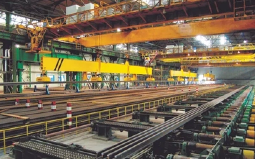
Selecting reliable lifting electromagnets is also about choosing a supplier with real design and manufacturing strength.
A supplier with real engineering ability is more likely to optimize structure, lifting efficiency, and practical performance for specific materials and work conditions.
Experience matters because industrial lifting problems are usually application-specific. A knowledgeable supplier can often recommend a more suitable electromagnet based on the material, crane arrangement, and production target.
In our view, buyers should avoid reducing the decision to initial price alone. A cheaper but less suitable lifting electromagnet may create hidden costs through unstable handling, lower lifting efficiency, additional labor correction, shorter service life, or more downtime. A reliable model that better matches the application often brings greater value over time.
This is especially true in operations where cranes, loading systems, and material flow work continuously. The cost of poor performance can quickly exceed the difference in purchase price.
How to select reliable lifting electromagnets for industrial use comes down to one practical principle: match the electromagnet to the material, the environment, and the real lifting task. Buyers should look carefully at lifting capacity, magnetic permeability, field distribution, insulation quality, sealing design, release control, and supplier capability. These are meaningful indicators when evaluating reliability.
For industrial users handling steel plates, scrap, coils, rails, billets, tubes, ingots, and similar materials, a reliable lifting electromagnet is more than a lifting tool. It is part of safe and efficient production. In our view, careful selection leads to better handling stability, stronger long-term value, and smoother daily operation. If you want to explore suitable lifting electromagnet solutions in more detail, Hunan Zhongke Electric Co., Ltd. is worth contacting for further information and discussion.
Q: What should we check first when selecting reliable lifting electromagnets for industrial use?
A: The first step is to identify the exact material being lifted, such as steel plate, scrap, coil, rail, billet, or ingot, because different materials need different magnetic lifting characteristics.
Q: Why is magnetic field distribution important in lifting electromagnets?
A: Magnetic field distribution is important because an even magnetic field helps keep the load stable, improves lifting safety, and supports better handling of bent or irregular steel materials.
Q: How does insulation quality affect lifting electromagnet reliability?
A: Insulation quality affects lifting electromagnet reliability because strong coil insulation helps support electrical safety, stable operation, and longer service life in demanding industrial environments.
Q: Why should buyers match lifting electromagnets to specific applications?
A: Buyers should match lifting electromagnets to specific applications because different materials, lifting patterns, and work environments require different magnetic performance, protection levels, and handling characteristics.