Views: 0 Author: Site Editor Publish Time: 2026-11-29 Origin: Site


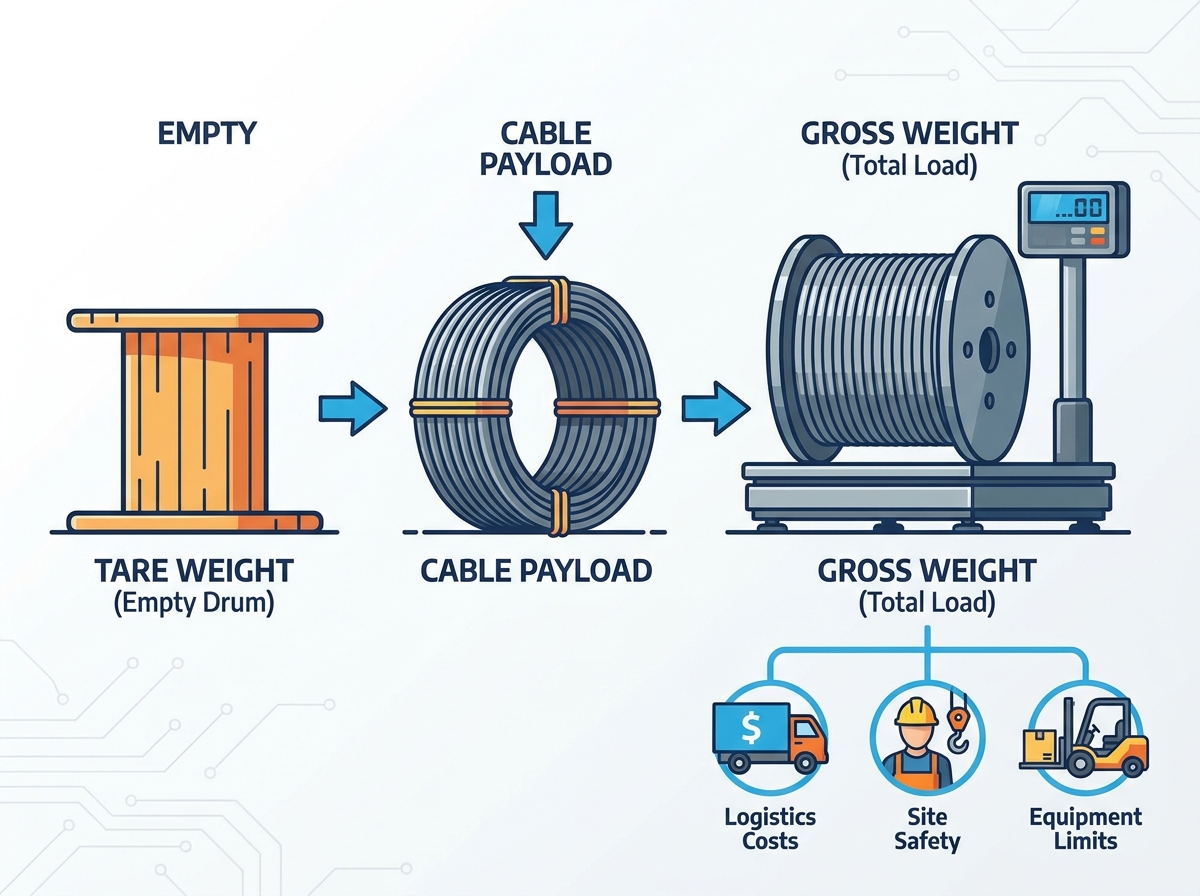
Industry professionals often view the mass of a spool as a simple, static measurement on a specification sheet. In reality, this metric functions as a highly dynamic variable. It dictates complex transportation expenses, stringent site safety protocols, and specific handling equipment necessities. Managing these elements requires continuous oversight throughout the supply chain.
Miscalculating the empty tare weight or the fully loaded gross weight frequently creates severe logistical bottlenecks. These errors directly lead to damaged goods, costly project delays, or dangerous compliance failures during material handling operations. You simply cannot afford to ignore these shifting variables when planning large-scale installations.
Selecting the proper Cable Drum requires evaluating precise load thresholds alongside material specifications and physical infrastructure limits. You will learn how to accurately assess different materials, calculate exact weight distributions, and implement safer warehouse strategies. We will explore everything from structural physics to specialized lifting requirements to keep your next project entirely on track.
Total Cost of Ownership: A cable drum’s weight directly impacts shipping freight rates and specialized handling equipment costs.
Material Trade-Offs: Wood, steel, and plastic drums offer distinct tare-weight-to-load-capacity ratios that must align with project scale.
Capacity vs. Physics: Maximizing cable length on a single drum requires precise calculations of flange diameter and weight distribution to prevent structural failure.
Safety & Compliance: Gross weight dictates heavy-duty racking configurations and lifting equipment minimums, requiring adherence to strict operational guidelines.
Logistics and freight economics depend heavily on accurate mass calculations. The empty weight, known as tare, establishes your baseline shipping expenses. The fully loaded weight, known as gross, determines transport limits. These metrics dictate whether shipments qualify for Less Than Truckload (LTL) or Full Truckload (FTL) services. Freight carriers calculate rates based on cargo density and total mass. Heavy shipments quickly max out FTL weight restrictions. This forces logistics teams to charter additional trucks. Conversely, shipping empty spools wastes valuable trailer space. Both scenarios drain project budgets rapidly if poorly managed.
Handling constraints present another major operational challenge. Underestimating gross mass severely limits site mobility. Project managers often assume standard forklifts can handle incoming deliveries. When a massive Cable Drum arrives, standard warehouse equipment may stall or tip over. You are then forced into last-minute rentals of higher-capacity cranes or specialized forklifts. These emergency rentals carry premium price tags. They also cause immediate workflow delays while waiting for heavy machinery to arrive on site. Soil bearing capacity at the drop site also matters. Heavy loads sink into soft ground, complicating extraction and payout processes.
Overloading an under-specced spool introduces severe risks of structural failure. Every spool features specific engineered load limits. Pushing beyond these thresholds stresses the core barrel immensely. Lateral pressure builds against the side walls during transit. This pressure eventually causes catastrophic flange blowouts. A blown flange immediately exposes expensive power lines to physical damage. Insulation gets crushed under shifting loads. Project delays multiply rapidly as you scramble to secure replacement lines and safely dispose of ruined materials.
Selecting the right material requires balancing upfront capabilities with logistical realities. Wood remains the most common choice across multiple industries. Wooden spools offer a moderate tare mass. Manufacturers can customize wooden designs quickly and cost-effectively. They remain an excellent choice for domestic, medium-duty projects. However, international shipping introduces strict compliance hurdles. You must track ISPM 15 fumigation compliance carefully. Untreated wood faces immediate rejection at customs borders. Furthermore, wood acts like a sponge. It absorbs environmental moisture rapidly during outdoor storage. A wet spool weighs significantly more than a dry one. This fluctuation throws off critical freight load calculations.
Steel models provide the highest possible load-bearing capacities. They feature the heaviest tare mass by a wide margin. Heavy industrial operations rely entirely on steel cores. They support massive line lengths without structural bowing. Steel is also highly reusable, resisting weather degradation effectively. They represent a superb investment for continuous heavy-duty use. The primary downside involves reverse logistics. Returning empty steel units incurs very high shipping fees due to their dense mass. Project managers must plan return freight routes carefully to maintain profitability.
Plastic and plywood models feature the lowest tare mass available. They carry strictly limited load capacities. They suit telecom wires, fiber optic lines, and lighter control lines perfectly. Plastic eliminates international pest compliance risks entirely. It never absorbs moisture, keeping transit weights perfectly stable. However, these lighter materials lack scalability. They simply cannot support heavy industrial power cables or armored wires safely.
Cable Spool Material Specification Profile
Material Type | Tare Mass Level | Load Capacity | Key Environmental Trait | Best Application |
|---|---|---|---|---|
Treated Wood | Moderate | Medium to High | Absorbs moisture, alters mass | Domestic power & general industrial |
Solid Steel | Very High | Maximum | Weather resistant, stable mass | Heavy offshore & armored lines |
Recycled Plastic | Low | Light | Immune to pests and moisture | Telecom & fiber optics |
Plywood Hybrid | Low to Moderate | Light to Medium | Prone to splintering over time | Short-run residential wire |
Understanding internal variables prevents catastrophic equipment failures. The outer diameter (OD) of your line matters immensely. The inner barrel diameter dictates the safe bending radius of the line. The flange diameter establishes the absolute maximum fill limit. You must evaluate the relationship between these three dimensions carefully. They collectively dictate the total gross mass you can safely achieve. Exceeding the flange capacity risks lines slipping off the edge. Narrow barrels force thick lines to bend beyond safe physical limits.
Weight distribution physics play a critical role during transport. Improperly balanced loads create severe dynamic hazards. Spooled lines can shift inside the trailer during highway transit. Hard braking forces this mass forward suddenly. This shifting creates dangerous lateral forces against the spool walls. It destabilizes the transport vehicle and risks trailer rollovers. Furthermore, internal shifting causes coiled lines to bind. Tangled lines halt installation progress entirely when they reach the job site.
We highly recommend using dedicated sizing calculators. Technical sizing tools establish a verifiable baseline. They calculate exact gross weight before procurement begins. Never rely on rough visual estimates. Guessing capacity limits leads to overloaded flanges and broken equipment. You must input specific variables into these software tools. They output safe traverse margins and precise clearance limits. Relying on engineering formulas keeps your logistics team and job site safe.
Warehouse storage demands rigorous safety audits and infrastructure upgrades. Heavy spools require highly specialized racking configurations. Standard pallet racking systems present a severe safety hazard. Typical warehouse racks buckle under concentrated cylindrical loads. You must implement reinforced cradles and heavy-duty structural bracing. Certified engineers should perform detailed load reviews before any inventory arrives. They verify floor bearing capacities and rack anchor strength. Storing a dense Cable Drum improperly risks catastrophic rack collapse.
Lifting and spooling present entirely distinct operational challenges. You must match the item's gross mass to proper handling equipment. Ensure your spindle bars meet or exceed the required yield strength. Select heavy-duty hydraulic jacks and sturdy A-frames accordingly. Safe payout relies entirely on properly rated gear. Weak spindle bars bend permanently under heavy dynamic loads. This bending locks the spool in place and stops production lines instantly.
Handling procedures require strict oversight and standardized training. Follow core operational guidelines carefully to prevent accidents and material damage.
Do lift from the spindle hole: Always run a properly rated steel bar through the center hole for lifting.
Do use approved spreader beams: Spreader bars keep lifting chains completely vertical, preventing lateral crush damage to flanges.
Do secure wedges during storage: Place heavy-duty chocks beneath the flanges to prevent accidental rolling on warehouse floors.
Don't drop units from tailgates: Dropping heavy units causes micro-fractures in wood and severe denting in steel.
Don't roll them over uneven surfaces: Rolling heavy units over rocky debris chips the edges and compromises overall flange integrity.
Don't lay them flat on their sides: Storing them flat makes lifting dangerous and often crushes the underlying line layers.
Specify your exact logistical requirements early in the planning phase. Define your project success criteria before contacting any packaging suppliers. Establish the exact gross weight parameters of your payload first. Factor in transportation distance, transit modes, and site storage conditions. You must assess vendor capabilities rigorously. Look for suppliers offering certified load testing data. They should provide transparent tare mass specifications across all materials. Simple dimension charts do not guarantee structural integrity under dynamic stress.
Use a logical decision matrix to evaluate your options objectively. Weigh the upfront cost of lighter materials carefully against durability. Follow this structured approach to narrow down your choices:
Payload Analysis: Determine the exact outer diameter and total length of the required line.
Logistics Mapping: Calculate LTL versus FTL shipping costs based on estimated gross mass.
Equipment Audit: Review the maximum lifting capacity of your site cranes and forklifts.
Environmental Check: Assess whether the spool will sit in mud, rain, or a climate-controlled warehouse.
Cost-Benefit Analysis: Compare the replacement cost of cheap materials against the longevity of heavy-duty options.
Higher load limits ensure long-term project viability. Cheap spools often fail during complex, high-stress installations. These structural failures ultimately cost much more than premium packaging materials. Advise your procurement team to consult a certified packaging engineer. Request a custom load assessment directly from the manufacturer. Professional assessments mitigate hidden logistical risks effectively. They align your infrastructure capabilities with the perfect equipment choice.
Understanding mass dynamics remains a foundational element of project planning. A Cable Drum dictates logistics, safety protocols, and physical infrastructure requirements simultaneously. Accurately calculating tare and gross mass prevents severe bottlenecks. It ensures compliance with transportation laws and protects expensive materials.
Choosing equipment based solely on upfront costs frequently causes back-end logistical penalties. Ignoring weight implications leads to broken flanges, expensive crane rentals, and ruined schedules. Durability and accurate capacity planning always yield better long-term results.
Take action by auditing your current specifications immediately. Review your warehouse racking capacities and handling gear. Contact a technical sales team to align spool capabilities precisely with your required payload parameters. Proactive planning eliminates shipping surprises and keeps your site operations perfectly synchronized.
A: Tare weight represents the completely empty spool. Gross weight includes the empty spool plus the maximum capacity of spooled line. Procurement decisions must account for total gross weight to ensure safe transport, proper lifting gear, and adequate warehouse racking strength.
A: A larger flange diameter increases volumetric capacity, allowing longer lines. This exponentially increases the gross weight. The central core barrel and flange material must be structurally rated to support this massive increase in continuous radial load without buckling.
A: Yes. Untreated or exposed wooden units absorb significant environmental moisture from rain or high humidity. This absorption drastically increases their tare weight. Such fluctuations potentially alter complex shipping calculations and demand heavier handling requirements on site.
A: Wooden units shipped internationally must strictly meet ISPM 15 standards for certified heat treatment or fumigation. Additionally, handling extremely heavy loads requires strict adherence to OSHA guidelines or regional lifting and rigging safety standards to protect workers.