Views: 0 Author: Site Editor Publish Time: 2026-09-06 Origin: Site


A slab electromagnetic stirrer plays a crucial role in modern continuous casting operations. It actively mitigates centerline segregation deep inside the solidifying strand. It also improves the equiaxed grain ratio across various steel grades. You face serious production risks when stirring efficiency drops. Metallurgical defects will spike rapidly. These stirring systems represent a significant capital expenditure for any steel plant. You must accurately diagnose the root cause of performance loss early. Doing so is vital before you commit to costly repairs or complete replacements.
This guide provides a comprehensive diagnostic framework for plant engineers. We will help you evaluate your current equipment degradation thoroughly. You can determine if the underlying root cause stems from thermal, electrical, mechanical, or specification-related issues. Understanding these factors helps you map out a technically sound resolution path.
Performance drops are typically traced back to three main areas: cooling system failure, coil insulation degradation, or mechanical shielding (gap changes).
Maintaining a strong thrust force in roll electromagnetic setups requires strict alignment and specific frequency tuning to penetrate the slab shell.
Evaluating baseline slab electromagnetic stirrer specifications against current operational realities is the first step in the repair-versus-replace decision.
Selecting a reputable slab electromagnetic stirrer supplier requires vetting their approach to thermal management and custom frequency control.
Operating a degraded stirring system directly harms your metallurgical quality metrics. Diminishing magnetic flux density correlates directly to increased centerline porosity. It also worsens severe carbon segregation. Liquid steel requires continuous fluid flow to wash away solute-rich liquid from the solidification front. The equiaxed crystal zone shrinks when the stirring force weakens. Columnar crystals grow unabated toward the center. This structural shift traps impurities in the slab core.
This quality drop translates immediately into massive yield loss. We measure this performance loss heavily in financial terms. High-value steel grades suffer the most from internal defects. Electrical steels lose their essential magnetic properties. API pipe grades become highly susceptible to hydrogen-induced cracking. Quality control teams must downgrade these defective slabs to commercial grades. The revenue impact of downgrading specialized alloys destroys casting profit margins.
Plant managers eventually face a critical decision threshold. You often employ operational workarounds to compensate for weak stirring. Slowing down the continuous casting speed is a common temporary fix. Reduced casting speed allows the weakened magnetic field more time to stir the molten pool. However, this dramatically reduces your overall daily tonnage. The financial penalty of lost production volume eventually exceeds the cost of equipment intervention. You must fix the stirrer hardware when production slowdowns dictate your daily schedule.
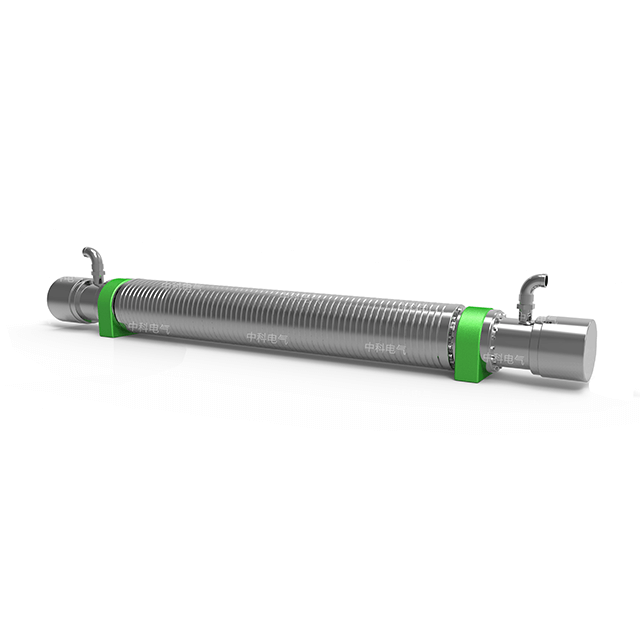
Cooling water infrastructure failures rank among the most frequent culprits for power loss. The internal copper coils carry massive electrical currents. They require highly purified cooling water to prevent thermal runaway. Poor water quality introduces dissolved minerals into the system. These minerals precipitate and form scale inside the hollow copper conductors. Scale acts as a highly effective thermal insulator. It prevents heat from escaping the copper.
Restricted water flow causes localized overheating within the coils. Copper exhibits a positive temperature coefficient of resistance. As the temperature rises, electrical resistance spikes. This higher resistance chokes the current flow from the power supply. A failing electromagnetic stirrer will therefore output a significantly weaker magnetic field. You lose stirring power entirely due to basic water chemistry mismanagement.
Insulation degradation presents a more insidious problem. Manufacturers wrap the copper coils in advanced epoxy and mica insulation systems. This insulation breaks down gradually over years of operation. Continuous thermal cycling drives this inevitable destruction. The materials expand and contract repeatedly. Micro-cracks form within the resin matrix. Moisture and conductive dust eventually penetrate these microscopic fissures.
This breakdown leads to subtle inter-turn short circuits. Current bypasses several loops of the copper coil. The effective number of coil turns decreases. Ampere-turns define your total magnetic field strength. The magnetic field drops in direct proportion to the bypassed turns. These minor shorts rarely trip the main power supply ground-fault alarms. Your system appears functional on the control screen, but the molten steel receives inadequate stirring energy.
Magnetic core saturation further robs your system of power. The core consists of stacked silicon steel laminations. Manufacturers coat each lamination to prevent electrical conductivity between plates. High operating temperatures degrade this interlaminar coating over time. Eddy currents begin flowing freely between the steel plates. These stray currents generate massive parasitic heat. They degrade the magnetic permeability of the core assembly. The core can no longer project the magnetic flux effectively into the strand.
Physical distance dictates magnetic field strength based on the inverse square law. Air gap expansion ruins performance rapidly. Structural wear occurs naturally throughout the casting bow. The mold housing and support frames undergo immense thermal and mechanical stress. Bearings wear down. Support brackets bend. This structural fatigue increases the physical distance separating the stirrer face from the liquid steel.
Even a few extra millimeters of air gap exponentially reduces magnetic field penetration. The liquid steel simply does not feel the stirring force. Maintenance teams often chase electrical ghosts when the true root cause is purely mechanical alignment.
Interference poses major challenges in complex roller configurations. Plant engineers struggle constantly to maintain a strong thrust force in roll electromagnetic setups. These systems house the stirring coils inside or directly behind the strand support rolls. The rolls themselves must be strictly non-magnetic. Austenitic stainless steels are standard for this application.
However, non-magnetic roll materials degrade over time under extreme heat. Maintenance teams sometimes mistakenly replace worn rolls using standard ferromagnetic steel alternatives. Ferromagnetic rolls act as magnetic sponges. They absorb the magnetic field before it ever reaches the molten strand. The stirrer wastes all its energy magnetizing the support roll instead of moving the liquid steel.
Mold copper wear also alters system performance. Mold stirrers sit directly behind the primary copper plates. Copper acts as an electrical shield against alternating magnetic fields. The thickness of the copper plate determines the exact frequency required to penetrate it. Constant friction from the descending steel wears down the copper face. Maintenance crews machine the plates thinner during routine refurbishments.
These variations in copper thickness change the electrical shielding effect completely. A thinner copper plate allows high-frequency fields to penetrate more easily. The magnetic field geometry changes inside the mold. The stirring pattern shifts from a controlled rotation into turbulent surface waves. You must recalibrate your equipment frequencies every time mold plate thickness changes.
Operational drift frequently causes perceived performance losses. The stirrer hardware might be perfectly healthy. The problem often lies in a frequency-to-slab-thickness mismatch. Metallurgists frequently change slab dimensions to meet new customer orders. They also adjust casting speeds to optimize caster throughput. Changing these parameters without updating your operational stirring frequencies leads to failure.
A frequency set too high will fail to penetrate a thicker slab shell. The magnetic flux concentrates entirely on the outer solidified surface. We call this phenomenon the skin effect. The liquid core receives zero stirring energy. Conversely, a frequency set too low fails to induce sufficient electrical current in the melt. You must match the electrical frequency precisely to the real-time thickness of the solidifying shell.
Outdated power supplies strangle performance. Aging variable frequency drives (VFDs) fail to meet modern demands. Older low-frequency inverters utilize outdated switching technology. They cannot deliver pure sinusoidal waveforms to the coils. These degraded waveforms contain heavy electrical harmonics.
Harmonics are essentially parasitic frequencies. They generate immense excess heat in the coils. They contribute absolutely nothing to the physical stirring force. Modern systems utilize advanced IGBT-based power supplies to ensure clean sine waves. An aging power supply forces your coils to run hotter while doing less actual work.
Specification drift is the final silent killer of efficiency. Steel plants evolve over the decades. A caster originally designed for basic construction rebar might now produce advanced high-strength steels (AHSS). These complex alloys require much stronger internal stirring forces. The original slab electromagnetic stirrer specifications simply cannot handle the new metallurgical burden. The equipment is not broken. It is merely obsolete for your current casting requirements.
You need hard data to make informed engineering decisions. Implement strict condition monitoring steps before authorizing massive capital budgets. Proper testing separates mechanical issues from fatal electrical failures.
Perform baseline insulation resistance testing. Use a high-voltage Megger to check the Polarization Index (PI). A low PI score indicates severe epoxy breakdown.
Measure cooling water flow rates and conductivity. Compare the pressure drop across the coil against factory baseline data. High pressure drops confirm internal scaling.
Record in-mold or in-strand Gauss meter readings. Execute this step during scheduled maintenance downtimes. Map the actual magnetic flux density across a grid. Compare this real-world map to the original factory commissioning curves.
Conduct thermographic imaging of the power cables and terminal boxes. Look for localized hotspots indicating loose connections or harmonic heating.
When is repair the right choice? Repair remains highly viable if you isolate the issue to external components. A failing variable frequency drive is easily swappable. Reversible cooling system scaling is curable via chemical flushing. Minor superficial damage to terminal boxes requires only localized patching. You can often restore full performance without touching the main coil assembly.
When is replacement mandatory? You must replace the unit if the Megger tests prove widespread inter-turn shorting. Severe core lamination degradation is also irreversible. Upgrading becomes necessary when your current casting grades demand higher flux densities.
Component Checked | Diagnostic Method | Warning Sign | Action Required |
|---|---|---|---|
Coil Insulation | Megger / PI Test | Reading < 2.0 Megohms | Factory Rewind / Replace |
Cooling Circuit | Pressure/Flow Meter | >15% Drop in Flow Rate | Chemical Acid Flush |
Magnetic Field Strength | Gauss Meter Grid | >20% Drop at Centerline | Verify Air Gap / Replace |
Power Supply | Oscilloscope | High Harmonic Distortion | Upgrade VFD Cabinet |
Drafting updated specifications requires careful attention to detail. Map out your toughest steel grades first. Define the required magnetic flux density at the exact strand center. Specify the ideal frequency ranges based on your maximum slab thickness. Ensure the new coils meet Class H or Class C insulation standards for maximum thermal resilience.
Vetting a new slab electromagnetic stirrer supplier is critical to your long-term success. Look for engineering teams boasting deep multiphysics modeling capabilities. They must prove their thermal management designs through computational fluid dynamics (CFD). Demand concrete performance guarantees regarding thrust force penetration into the molten core. A reliable partner will design the system around your exact continuous casting parameters.
Performance loss in casting equipment is rarely a sudden or catastrophic failure. It usually manifests as a slow, compounding result of thermal degradation, mechanical wear, and operational drift. Ignoring minor flux density drops leads inevitably to severe metallurgical rejections. By isolating electrical faults from mechanical shielding issues, you save crucial maintenance time.
Plant engineers should conduct a comprehensive magnetic and electrical audit immediately. Use Gauss meters and Megger tests to establish your current baseline. Compare these figures against your target steel grade requirements. Use this data to determine your next steps definitively. You can then confidently decide whether an in-house repair, a factory rewind, or a next-generation system upgrade offers the most robust path forward for your facility.
A: Plant maintenance teams should test insulation resistance regularly based on predictive maintenance schedules. We recommend conducting thorough Megger tests during major continuous caster turnarounds. For heavily utilized casters, testing every 3-6 months ensures optimal safety. This frequency aligns well with standard duty cycles and helps catch epoxy degradation before catastrophic short circuits occur.
A: Roll configurations face unique mechanical challenges. Roll bending under intense thermal stress increases the vital air gap. Bearing wear further distances the stirrer from the strand. Additionally, if maintenance inadvertently installs ferromagnetic replacement rolls, the roll material itself creates a shielding effect. This absorbs the magnetic field entirely before it penetrates the liquid steel.
A: Yes, you can often upgrade aging low-frequency inverters to modern IGBT power supplies. This improves wave control, reduces harmful harmonics, and increases overall electrical efficiency. However, a new drive cabinet cannot overcome physical coil shorts, heavily degraded silicon magnetic cores, or collapsed internal cooling channels. You must verify coil health first.
A: Modern specifications must detail several critical parameters. You must clearly state the required magnetic flux density measured at the strand centerline. Include the specific low-frequency ranges needed for your slab thickness. Outline the maximum allowable cooling water temperature rise. Finally, demand a minimum of Class H coil insulation to withstand severe casting environments.