Views: 0 Author: Site Editor Publish Time: 2026-09-03 Origin: Site


Achieving the perfect balance in continuous casting remains a critical challenge for steelmakers today. Under-sizing your equipment fails to break dendrites effectively during the initial solidification phase. Conversely, over-sizing introduces aggressive meniscus turbulence. This excessive force often leads to severe mold powder entrapment and catastrophic surface defects. Sizing these systems is never a simple guessing game. It actively requires aligning strict metallurgical goals alongside complex electrical and spatial realities. Engineers must carefully evaluate multiple variables to guarantee optimal molten steel flow. This guide provides a robust framework to help you determine the exact capacity required for your specific continuous casting parameters. You will learn how to evaluate section sizes, match electrical capacity limits, and properly vet potential manufacturing partners. Following these clear steps ensures high capital efficiency and strict metallurgical compliance on the factory floor.
Capacity is driven by section size and steel grade: Billet, bloom, and slab casters require vastly different magnetic induction intensities.
Bigger is not inherently better: Excessive stirring power leads to surface defects and slag inclusion; precision frequency control is more critical than raw power.
Installation dictates design: Internal vs. external mold constraints dictate the physical footprint and cooling requirements of the unit.
Supplier validation is mandatory: A reliable mold electromagnetic stirrer supplier must provide metallurgical simulation data (e.g., Lorentz force modeling) prior to fabrication.
Precision is everything when selecting a mold electromagnetic stirrer. Selecting an improperly sized unit creates cascading failures throughout the continuous casting process. Operators often realize these issues too late, resulting in downgraded billets or outright scrap. You must understand the specific risks associated with both under-sizing and over-sizing the unit.
Insufficient stirring force fails to generate adequate molten steel rotation. The equipment simply lacks the power to break off growing dendrite tips. When this happens, the equiaxed crystal ratio remains stubbornly low. Columnar crystals continue growing towards the center of the strand unabated. This condition leaves centerline segregation and internal porosity completely unresolved. Your metallurgical engineers will immediately spot severe piping and structural weaknesses during quality inspections. An under-powered unit offers almost zero return on investment.
Many plant managers mistakenly believe more power equates to better quality. However, excessive electromagnetic force severely disrupts meniscus stability. The violent fluid rotation creates deep vortexes near the mold surface. This turbulence traps floating mold powder directly into the solidifying steel shell. It leads to severe slag inclusion, deep surface cracks, and massive material downgrades. Furthermore, running an oversized unit wastes massive amounts of electrical energy daily.
The ultimate goal involves creating a highly controlled, uniform rotating magnetic field. You want to optimize the molten steel flow precisely. The stirring velocity must remain strong enough to shear dendrites. Simultaneously, it must not breach the critical meniscus velocity threshold. Industry standards generally suggest keeping surface velocity below 0.3 to 0.4 meters per second. Hitting this sweet spot requires exact capacity calculations.
Determining the right capacity involves assessing the physical dimensions of your casting format. The metallurgical properties of your targeted steel grades also play a massive role. You must define clear mold electromagnetic stirrer specifications before engaging any manufacturer.
Different casting formats demand completely different electromagnetic approaches. The physical distance between the stirrer coils and the liquid core dictates the required power input.
Billets & Blooms: Smaller square sections require highly specific penetration depths. Operators typically use rotary stirring modes here. Small billets (e.g., 120x120mm) require less absolute power but demand precise high-frequency control. Large blooms (e.g., 300x400mm) need deep magnetic penetration. This requires significantly more robust coils and lower frequency settings.
Slabs: Wide slab casters face distinct challenges. A simple rotary field cannot cover a 1500mm wide slab evenly. These formats require dual-coil or multi-mode designs. Engineers often deploy butterfly or traveling magnetic fields. These complex configurations manage wider solidification profiles and prevent localized flow dead-zones.
Format Type | Typical Section Range | Recommended Stirring Mode | Primary Metallurgical Focus |
|---|---|---|---|
Small Billet | 100mm to 150mm sq. | Rotary Magnetic Field | Surface quality and minor segregation reduction |
Large Bloom | 200mm to 400mm sq. | Rotary or Dual-Rotary | Deep penetration for centerline segregation |
Thin Slab | 50mm to 90mm thick | Traveling Magnetic Field | Meniscus stabilization and heat distribution |
Thick Slab | 200mm to 300mm thick | Butterfly or Multi-Mode | Uniform flow across extended width profiles |
The chemical composition of your steel dictates the necessary fluid flow velocities. High-carbon steels and specialized alloys prove highly sensitive to centerline segregation. These grades typically require aggressive fluid flow velocities ranging between 0.4 and 0.6 m/s in the lower mold region. Conversely, low-carbon grades prove more sensitive to surface cracking and slag entrapment. They require much gentler stirring profiles. Your unit must possess the dynamic range to handle your entire grade mix.
Modern plants continuously push for higher casting speeds to maximize throughput. However, faster casting speeds significantly reduce the residence time of the steel inside the mold. The molten metal passes through the active magnetic zone much quicker. To compensate, you must adjust the magnetic field's active zone length and intensity. High-speed casters often require elongated stirrer designs to ensure adequate energy transfer into the liquid core.
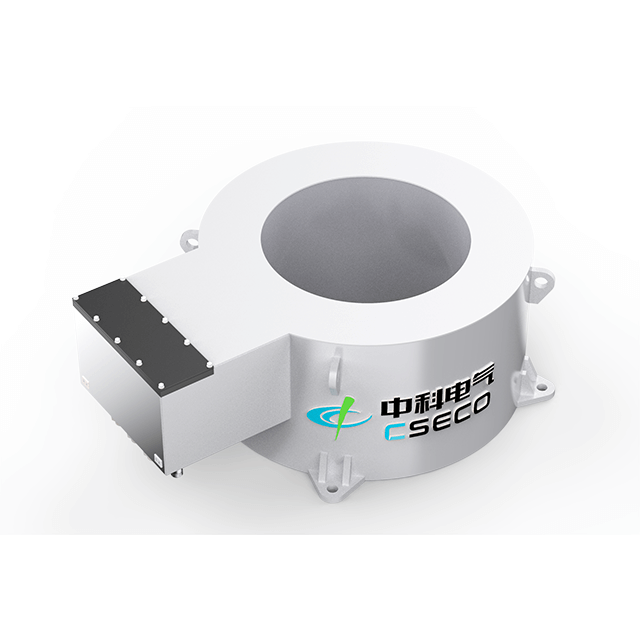
Once you define your casting parameters, you must translate them into electrical requirements. This step bridges metallurgical theory and electrical engineering. A reliable electromagnetic stirrer must deliver specific magnetic flux densities at specific frequencies.
The core metric for capacity is the central magnetic induction, usually measured in Gauss or Tesla. You must match this induction capability to your mold wall thickness. The copper tube material acts as a massive electromagnetic shield. It absorbs and deflects a large portion of the magnetic energy before it ever reaches the steel.
Thicker mold walls naturally require higher input power to overcome this shielding effect. Furthermore, specialized copper alloys complicate matters. Materials like Copper-Chromium-Zirconium (Cu-Cr-Zr) offer excellent wear resistance but possess different electrical conductivities compared to Silver-bearing Copper (Cu-Ag). If you upgrade to Cu-Cr-Zr molds, you will likely need a higher-capacity unit to achieve the exact same internal stirring force.
Raw power means nothing without frequency control. The frequency directly influences the "skin depth" or penetration capability of the magnetic field.
Low-Frequency Capabilities: Deep penetration requires low frequencies. This proves absolutely essential for large bloom and slab applications. Standard systems might drop to 2Hz or 3Hz to push the Lorentz force deep into the strand center.
Adjustable Frequency Drives: Modern multi-grade casting operations demand flexibility. You must evaluate the importance of an adjustable low-frequency power supply. Most high-quality systems operate smoothly between 1Hz and 10Hz. This adjustability allows operators to fine-tune the stirring intensity for different steel grades on the fly.
High capacity units draw substantial electrical currents. You must assess the operational expenditure (OPEX) of running these coils continuously. However, you should balance this electrical cost directly against the reduction in product rejection rates. A properly sized unit drastically reduces downstream defects. The resulting increase in prime-quality yield almost always offsets the daily electrical consumption costs.
Even the most perfectly calculated capacity means nothing if it cannot physically fit your casting machine. Implementation realities often force engineers to compromise or seek highly customized solutions.
You must carefully assess the spatial limitations of your existing equipment. The area surrounding the mold oscillator and water jacket is notoriously cramped.
Retrofitting an older continuous casting machine (CCM) often strictly limits the physical volume of the stirrer coils. If you choose an internal in-mold design, the coils must fit within the existing water jacket housing. This severely limits the physical size of the iron core and copper windings. External mounting offers more space for larger, higher-capacity coils. However, external mounting places the coils further away from the molten steel, requiring even more power to bridge the physical gap.
Electromagnetic fields generate immense amounts of heat. High-capacity units generate significant thermal loads during continuous operation. You must manage this heat proactively to prevent catastrophic equipment failure.
These systems demand dedicated pure water internal cooling systems. You cannot simply use standard plant water. The cooling specifications typically include:
Low Conductivity: The water must remain ultra-pure (often below 2 microSiemens/cm) to prevent electrical arcing and coil short-circuits.
Stable Pressure: The system requires consistent pressure (usually 10 to 15 bar) to push water through the hollow copper conductors.
High Flow Rate: Adequate flow removes heat fast enough to protect the delicate epoxy insulation materials.
Common Mistake: Many plants upgrade their stirrer capacity but fail to upgrade the pure water cooling skid. This mismatch inevitably leads to coil overheating and premature failure within months of installation.
Purchasing this equipment requires a true engineering partnership. You cannot buy a professional high quality mold electromagnetic stirrer off the shelf like a standard motor. You must thoroughly evaluate your potential manufacturing partners.
Never accept a capacity recommendation based purely on a salesperson's guess. A reliable mold electromagnetic stirrer supplier must offer comprehensive 3D electromagnetic and fluid flow simulations. They should use industry-standard software (like ANSYS Maxwell or FLUENT) to model the Lorentz forces inside your specific mold. They must prove mathematically the proposed capacity will generate the required fluid velocities before fabrication begins.
Evaluate the supplier's engineering flexibility. Do they adapt their coil designs to fit your existing water jacket seamlessly? Or do they force you to accept a standard model requiring expensive plant modifications? A premium supplier will engineer the iron core and copper windings to maximize capacity within your exact spatial constraints. This custom approach saves you weeks of installation downtime.
The environment directly below the tundish is incredibly harsh. Ambient temperatures soar. Moisture is constant. You must demand transparent data regarding the unit's build quality.
Insulation Standards: Look for coil insulation rated Class H or higher. This ensures the unit survives intense thermal spikes.
Epoxy Potting Quality: The supplier must use vacuum pressure impregnation (VPI) techniques. This removes air bubbles from the epoxy, preventing internal arcing.
Reliability Metrics: Ask for guaranteed mean time between failures (MTBF) data based on real-world steel plant environments.
Best Practice: Request a visit to a reference plant currently using the supplier's equipment on a similar casting machine. Speaking directly with their operators provides invaluable insight into actual equipment longevity.
Selecting the right capacity requires bridging theoretical metallurgical targets with the physical constraints of the casting machine. You must balance the need for deep magnetic penetration against the risks of meniscus turbulence and spatial limitations. Precision sizing eliminates internal defects without sacrificing surface quality.
Take the following steps immediately to move your project forward:
Compile your exact mold drawings, including water jacket dimensions and oscillator clearance.
Document your full steel grade mix, noting the most segregation-sensitive and crack-sensitive alloys.
Establish a clear baseline of your current defect rates to measure future ROI.
Initiate a consultation with a qualified manufacturer to request customized 3D capacity simulations.
A: A properly sized and maintained unit generally lasts 5 to 10 years. Longevity depends heavily on the purity of your cooling water and the integrity of the internal insulation. However, a capacity mismatch often causes severe over-driving. This generates excessive heat, degrades the epoxy potting quickly, and causes premature coil failure.
A: No. While the physical hardware capacity establishes a maximum performance limit, you cannot use one setting universally. Operators must actively adjust the current and frequency via the control cabinet for different grades. Crack-sensitive steels require gentler stirring parameters, whereas segregation-sensitive high-carbon steels demand deeper, more aggressive magnetic penetration.
A: The copper mold acts as a powerful electromagnetic shield. Thicker mold walls absorb and attenuate the magnetic field significantly before it reaches the molten steel. Upgrading to thicker walls or denser materials like Cu-Cr-Zr forces you to implement a higher-capacity stirrer to achieve the exact same internal stirring force.