Views: 0 Author: Site Editor Publish Time: 2026-10-08 Origin: Site


In high-volume steel mills and bustling loading yards, specifying a billet lifting magnet involves much more than raw payload capacity. The true critical bottleneck in these intense environments is thermal management. Heat generation inside the coil changes everything. Underspecifying your magnet's operational timing leads to severe thermal fade. This causes drastically reduced magnetic holding force and catastrophic load drops. Conversely, overspecifying the system increases the dead tare weight on your EOT crane. This unnecessary bulk inflates your initial capital expenditure significantly. Getting this balance wrong disrupts the entire casting and rolling workflow. This article provides procurement engineers and facility managers with a solid, evidence-based framework. You will learn how to accurately calculate, evaluate, and specify the exact operational specifications required for your facility. We will guide you through matching equipment ratings to safe, continuous billet handling operations.
Mismatched operational ratings directly impact your daily production throughput. A magnet requiring excessive cooling time creates a massive operational bottleneck. You will inevitably see severe delays between the continuous caster and the rolling mill. Throughput drops significantly when operators must wait for overheated equipment to cool down. Every wasted minute in a steel yard translates into lost revenue.
Running a 50% or 60% rated magnet on a 75% operational loop brings severe consequences. It leads to rapid internal coil degradation very quickly. You also face premature wiring insulation failure. More importantly, this mismatch exponentially increases workplace safety risks. Dropped billets often occur due to a sudden, unpredictable loss of magnetic flux. Operators cannot safely maneuver heavy loads under these unstable conditions.
Conversely, purchasing higher capacity magnets requires installing larger heat sinks. They use heavier external casings and incorporate much more internal copper wiring. This extra material significantly increases the dead tare weight on your EOT crane. You might need costly crane structural upgrades to maintain the required safe working load (SWL). Underspecifying ruins production safety, while overspecifying wastes vital capital budgets unnecessarily.
Engineers define the lifting electromagnet duty cycle using a strict industry standard formula. You calculate it easily: Duty Cycle (%) = [Time Energized / (Time Energized + Time De-energized)] × 100. Industrial lifting standard bodies cap this specific calculation at a precise 10-minute cycle window. A 60% rating strictly means 6 minutes ON and 4 minutes OFF maximum.
Electromagnets eventually reach a steady-state operating temperature called thermal equilibrium. Continuous operation ignoring the required resting periods pushes the coil past this delicate equilibrium. Once exceeded, internal electrical insulation begins to break down structurally. Heat directly increases electrical resistance inside the copper coils. Higher resistance restricts current flow, which inherently weakens the magnetic field.
You must acknowledge the stark performance gap between cold and hot lift capacities. Cold lift capacity represents theoretical maximum strength when you first power the magnet. Hot lift capacity reflects the actual functional strength after hours of continuous cycling. Thermal fade causes this inevitable drop in lifting power. Procurement teams must base their safety calculations entirely on the hot lift capacity.
| Rating Percentage | Maximum Energized Time (ON) | Required Cooling Time (OFF) | Typical Application Scenario |
|---|---|---|---|
| 50% | 5 Minutes | 5 Minutes | Light duty, intermittent scrap sorting. |
| 60% | 6 Minutes | 4 Minutes | Standard duty, cold billet transfer. |
| 75% | 7.5 Minutes | 2.5 Minutes | High frequency, continuous hot billet casting. |
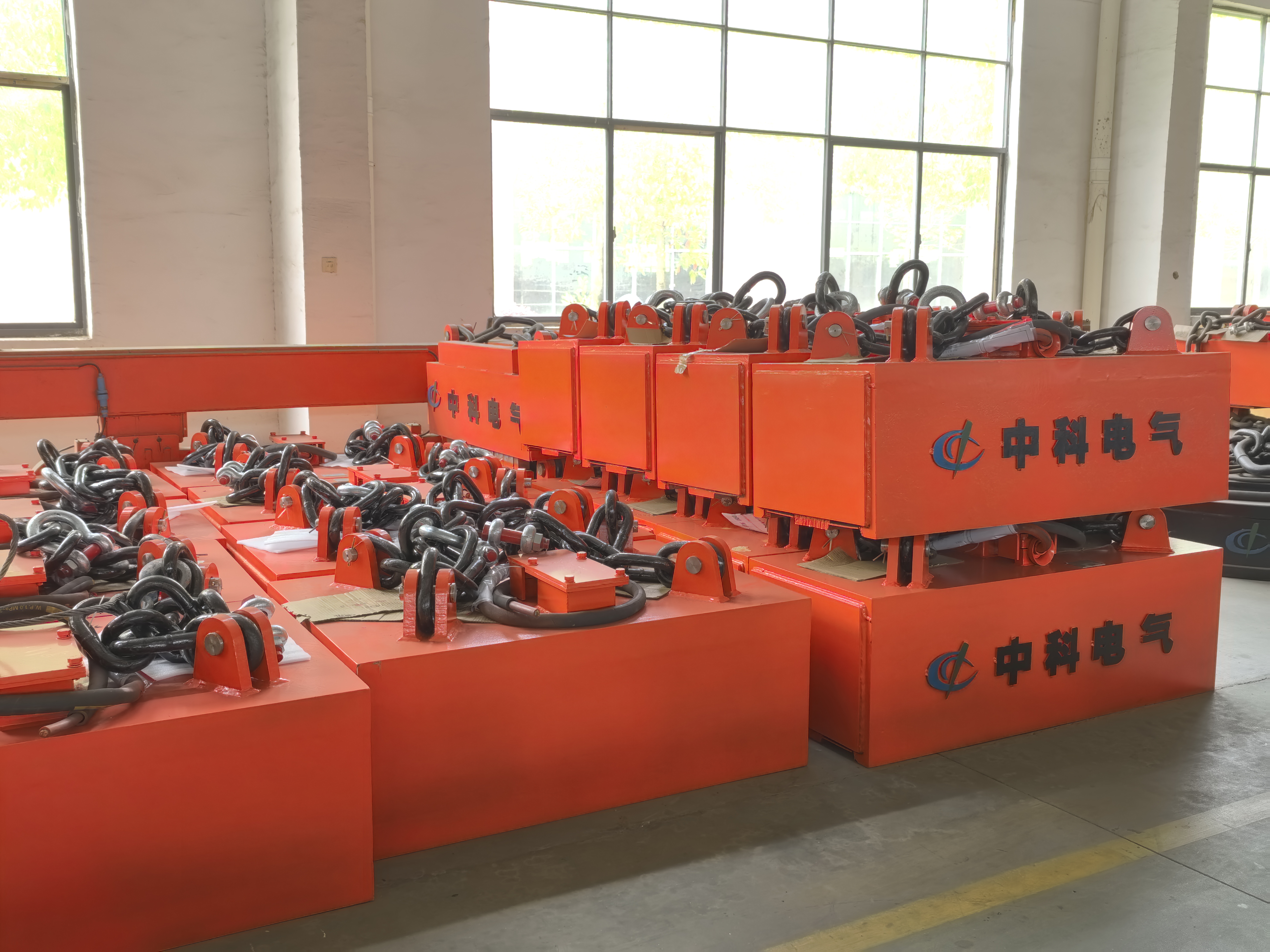
Evaluating your facility requires looking closely at three core operational dimensions. You must map these critical factors accurately before engaging any procurement process. Neglecting even one dimension compromises the entire lifting system.
Facility managers frequently shortlist the MW22 billet lifting electromagnet for continuous cast handling operations. This specific series addresses severe thermal and structural challenges efficiently. It serves as an excellent benchmark for heavy-duty industrial procurement.
We can analyze its advantages through several key engineering design choices:
A high-performance magnet remains only as reliable as its corresponding control panel. We highly recommend evaluating modern over-excitation controllers. These advanced controllers provide an initial voltage spike for secure gripping. They subsequently drop to a reduced holding voltage automatically. This smart process minimizes continuous heat generation immensely.
EOT crane integration requires careful, precise mathematical calculation. You must factor in the combined equipment dead weight carefully. Add the total mass of the magnets, the spreader beam, and heavy steel chains. Compare this total directly against the hoist's safe working load. Exceeding this limit causes severe mechanical wear on the crane cables.
Power failure compliance is absolutely non-negotiable in modern steel mills. You must mandate the integration of UPS battery backups immediately. These systems must hold the heavy billet securely for at least 15 to 20 minutes during an outage. This maintains critical load security regardless of the active lifting electromagnet duty cycle phase.
Moving from technical specification to vendor shortlisting requires strict documentation. Request certified thermal rise curves from all potential manufacturers. Always verify the exact cold-to-hot lifting capacity drop ratios before signing purchase orders. Ensure the vendor guarantees performance at your specific ambient yard temperatures.
Specifying the correct equipment is a precise, demanding balancing act. You must align production tempo, billet temperature, and crane capacity perfectly. Neglecting thermal management realities guarantees expensive operational failures.
A: No. Even with cold materials, exceeding the ON-time ratio prevents the internal copper or aluminum coils from shedding self-generated resistive heat. This will cause the internal temperature to exceed safety margins, resulting in thermal fade and potential drops.
A: Modern controllers use "over-excitation." They apply a higher voltage for the first few seconds to overcome air gaps and securely grip the billet, then drop to a lower holding voltage. This drastically reduces the continuous wattage moving through the coil, lowering overall heat generation.
A: These refer to the maximum thermal threshold the internal wiring insulation can withstand before degrading. Class H is standard for normal industrial operations, but handling high-temperature billets often requires Class C insulation, which can withstand continuous internal operating temperatures up to 220°C.
A: Billets are prone to deflection (bending) when lifted. Multiple smaller magnets (like a series of MW22 units) spaced along a spreader beam distribute the lifting force, preventing the billet from peeling away from the magnet face due to its own sagging weight.