Views: 0 Author: Site Editor Publish Time: 2026-08-12 Origin: Site


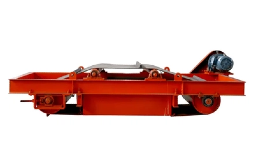
In industrial processing, separation efficiency directly affects product quality, equipment safety, production stability, and operating cost. Choosing the right magnetic separator is not just about adding a magnet to the line, but about matching the equipment to the material, impurity type, process conditions, and production goals. When selected properly, it can remove the right contamination at the right stage, improve material purity, reduce equipment wear, and support more reliable long-term performance.
A magnetic separator is often treated as an auxiliary device, but in many production lines it plays a central role in process control. The right equipment can help remove tramp iron, separate magnetic minerals, purify non-metallic materials, and protect downstream machinery from damage. The wrong equipment may leave contamination in the product, create inconsistent separation results, or increase maintenance pressure.
This is why separator selection matters so much. Industrial materials are not all the same. Some are coarse and dry, while others are fine and wet. Some contain large ferrous pieces that are easy to remove, while others contain weak magnetic particles mixed deeply into the feed. Different applications need different magnetic field strengths, separator structures, and operating methods. Better separation efficiency comes from this match between process need and equipment capability.
When people talk about magnetic separation efficiency, they often think only about how much iron is removed. In reality, better separation efficiency means more than that. It means the separator can remove impurities consistently, work well with the material flow, protect valuable product from unnecessary loss, and maintain stable performance over time.
A good separator should not only capture contaminants. It should also do so without creating unnecessary process disruption. In some cases, excessive attraction may pull out usable material along with the impurities. In others, poor field design may leave fine contaminants behind. The goal is balanced performance: high removal effectiveness, low product loss, stable operation, and a good fit with the production line.
The first step in choosing the right magnetic separator is understanding the material itself. This seems obvious, but it is often where problems begin. Material properties strongly affect how magnetic separation should be applied.
Dry and wet materials need different separator approaches. Dry bulk materials may require overband separators, drum separators, or permanent magnetic systems placed over conveyors or chutes. Wet slurry systems often need high-gradient or wet magnetic separation equipment designed to work inside liquid-based processing.
If the material state is misunderstood, the separator may not interact effectively with the contamination. That can reduce both separation efficiency and equipment reliability.
Particle size is another critical factor. Large tramp iron pieces are relatively easy to catch, while fine magnetic particles are more difficult. Fine powders and fine mineral particles often require more precise magnetic field control and stronger magnetic intensity.
For this reason, a separator that works well for coarse raw material may perform poorly in a fine purification process. Choosing by magnet size alone is not enough. Particle behavior must be considered.
Some contaminants are strongly magnetic and easy to separate. Others are weakly magnetic and require high-gradient or more specialized equipment. If the impurity is only weakly responsive to a magnetic field, a basic separator may not be effective enough.
This is especially important in mineral purification and fine industrial material processing, where contamination may be small, dispersed, and difficult to remove. Better separation efficiency depends on recognizing this difference early.
Different plants use magnetic separators for different reasons. The right selection depends heavily on what the company is trying to achieve.
In many industrial lines, the main goal is to remove tramp iron before it reaches crushers, mills, or conveyors. In this case, equipment protection is the priority. The separator should have strong attraction, good coverage of the material stream, and a practical installation design.
In other cases, the goal is not just to protect equipment but to improve product purity. This is common in non-metallic minerals, powders, and quality-sensitive industrial materials. Here, the separator must remove fine contamination more precisely while preserving the value of the main product.
In mining and beneficiation, the separator may be used to recover magnetic minerals or upgrade concentrate quality. The focus shifts from simple contamination removal to selective separation. This often requires more specialized equipment and more careful process matching.
Because these goals are different, the same separator cannot always deliver the best result in every case. Better separation efficiency begins with defining the real purpose of separation.
The same magnetic separator can perform very differently depending on where it is installed. Position matters because contamination characteristics change throughout the production line.
Installing a separator near the start of the process can prevent contamination from spreading deeper into the system. This is useful when raw materials arrive with mixed tramp iron or when upstream equipment protection is critical.
At intermediate stages, the separator may be used to improve the cleanliness of semi-processed material. This can help stabilize downstream operations and improve final quality.
In some lines, magnetic separation is used close to the end of production to remove remaining contamination before packaging or final product handling. At this stage, precision becomes especially important.
A well-matched installation point improves separator performance significantly. Even strong equipment may underperform if it is installed too late, too early, or in a location with poor material presentation.
Choosing the right separator means evaluating more than magnetic force. Several technical and practical features deserve attention.
A separator must have enough magnetic strength for the target contamination. Stronger is not always better, but insufficient field strength usually leads to poor removal performance. The field should be matched to the particle size, impurity type, and material depth.
Contaminants are not always sitting on the surface. In thicker material layers, the magnetic field needs to reach deeper into the stream. Deep penetration improves the chance of capturing buried particles rather than only top-layer contamination.
Real production lines are rarely perfectly stable. Feed rate, material size, concentration, and moisture may change. A separator that performs well only under one fixed condition may create inconsistent results. Better equipment should adapt to process variation more effectively.
Even a high-performance separator loses value if it causes frequent downtime. Reliable design, stable magnetic performance, durable components, and manageable maintenance requirements are all essential for long-term separation efficiency.
Efficiency should also be considered from an operating cost perspective. A separator that delivers strong results with lower energy use often creates better long-term value for the plant.
Selection Factor | What to Check | Why It Matters for Separation Efficiency |
Material state | Dry or wet feed | Determines suitable separator type and working method |
Particle size | Coarse, medium, or fine | Affects required field strength and separator design |
Impurity type | Strong magnetic or weak magnetic | Helps define whether standard or high-gradient separation is needed |
Separation goal | Equipment protection, purification, or recovery | Ensures the separator matches the actual process target |
Installation position | Conveyor, chute, slurry line, or final stage | Influences contact quality and removal effectiveness |
Magnetic penetration | Surface-only or deep-layer reach | Improves contaminant capture inside thicker material streams |
Feed variation | Stable or fluctuating conditions | Supports consistent performance under real production changes |
Maintenance and reliability | Ease of upkeep and structural stability | Protects long-term operating efficiency and reduces downtime |
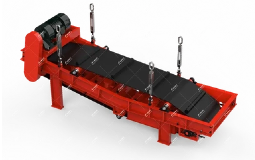
Many separation problems are not caused by bad equipment, but by poor selection decisions. From our experience, several mistakes appear often.
One common mistake is choosing only by price. Low initial cost may look attractive, but if the separator performs poorly, causes downtime, or fails to remove contamination effectively, the total cost becomes much higher.
Another mistake is choosing only by nominal magnetic strength. A stronger magnet does not automatically mean better results. Field design, material presentation, and process matching matter just as much.
Some plants also underestimate feed variation. They choose a separator based on ideal material conditions, then find that real production is more complex. A separator should be selected for actual operating range, not only laboratory-style assumptions.
Finally, some companies install the separator wherever space is available rather than where separation will be most effective. This can seriously limit performance even when the equipment itself is good.
Magnetic separation is not only about hardware. It is also about process understanding. A supplier with practical industry experience can often help identify the right separator type, suitable magnetic intensity, better installation position, and more realistic operating strategy.
This is especially important when the application is complex, the materials vary, or purity requirements are demanding. In these situations, equipment selection should be based on application logic, not just catalog comparison.
A supplier that understands both equipment and industrial processing can usually provide more useful support during selection, installation, and optimization. That support can make a major difference in the final separation result.
Choosing the right magnetic separator is one of the most practical ways to improve separation efficiency in industrial processing. The best result does not come from magnetic force alone, but from matching the separator to the material type, particle size, impurity characteristics, process goal, installation position, and actual operating conditions. When this match is done well, the separator can improve product purity, protect equipment, reduce contamination risk, and support more stable production.
From our point of view, the right magnetic separator is not just a machine for removing iron. It is a process tool that helps manufacturers build cleaner, safer, and more efficient operations. For companies that want to improve separation efficiency and choose a more suitable magnetic separation solution, it is worth learning more about Hunan Zhongke Electric Co., Ltd. Their experience in magnetic separation equipment may provide useful support for plants seeking better purification and stronger process performance.
Q: Why is choosing the right magnetic separator important for better separation efficiency?
A: It is important because the right separator matches the material, impurity type, and process condition, helping remove contaminants more effectively and consistently.
Q: What factors should be considered when selecting a magnetic separator?
A: Key factors include material state, particle size, impurity type, separation goal, installation position, feed variation, reliability, and energy consumption.
Q: Can one magnetic separator work for every industrial application?
A: No, different applications need different separator types because materials, contamination levels, and processing goals are not the same.
Q: How does the right magnetic separator improve industrial processing?
A: It improves industrial processing by reducing contamination, protecting downstream equipment, increasing product purity, and supporting more stable long-term production.