Views: 0 Author: Site Editor Publish Time: 2026-10-16 Origin: Site


Material handling facilities face a relentless challenge every single day. Operators must balance high conveyor throughput with reliable tramp iron removal. Hitting this balance determines your operational success and equipment longevity. Improper equipment sizing carries severe business risks. Tramp metal easily sneaks past weak magnetic fields. This failure causes damaged crushers, torn conveyor belts, and severe product contamination. Ultimately, these failures trigger costly unplanned downtime.
You need a rigorous, physics-based framework for suspended magnetic separator selection. This guide breaks down the critical relationship between belt speed, burden depth, and magnetic field strength. You will learn exactly how to match extraction forces to your specific operational constraints. We eliminate guesswork by focusing on core engineering principles. Read on to master the parameters necessary for flawless tramp metal extraction.
Successful tramp metal removal depends on strict physical laws. You cannot negotiate against gravity or momentum. Operators must calculate these variables precisely. We break down the primary engineering factors below.
Conveyor speed directly limits extraction time. We measure this velocity in Feet Per Minute (FPM) or Meters Per Second (MPS). Faster belts give tramp iron significantly less dwell time inside the magnetic zone. The magnetic field must overcome the forward momentum of the metal instantly. If you double your belt speed, the extraction window shrinks drastically. High-velocity belts require exponentially higher magnetic strength. Alternatively, they require longer magnetic profiles to maintain adequate exposure time.
Burden depth acts as a formidable physical barrier. Deep layers of conveyed material actively trap tramp iron. The physical weight of this material counteracts magnetic lift. Picture a heavy steel hex nut buried under six inches of wet coal. The magnet must pull the metal upward through dense, resisting material. Heavy bulk densities increase this resistance. You must evaluate the absolute maximum depth your conveyor handles during surge loads.
You must establish the true working distance. Engineers call this the suspension gap. Never measure solely from the magnet face to the empty belt. You must account for all physical layers.
Effective selection demands precise mathematics. You must calculate the exact pull force needed at the absolute maximum suspension gap. This calculation must assume peak conveyor velocity. If the magnet can lift the target metal at this extreme distance, your selection succeeds. Relying on average loads guarantees periodic failure.
Many facilities fail because they buy based on misleading metrics. Understanding magnetic projection saves your equipment from catastrophic damage.
High surface Gauss looks impressive on product specification sheets. However, it rarely guarantees successful extraction. Surface Gauss only measures magnetic strength directly touching the magnet face. It tells you nothing about reach. Successful separation relies entirely on the magnetic gradient. The gradient defines how far the field projects outward. A high-gradient field penetrates deep into the burden to capture tramp metal. A high-surface-Gauss magnet might lose all holding power just two inches away.
Table 1: Magnetic Metric Comparison| Metric Type | Measurement Location | Practical Value | Impact on Extraction |
|---|---|---|---|
| Surface Gauss | Zero distance (face of magnet) | Low | Cannot predict deep burden capture |
| Magnetic Gradient | At the target suspension height | Extremely High | Dictates actual pulling power through material |
| Pull Force | Various distances (inches/mm) | High | Matches specific metal mass to field strength |
You must match field strength to your specific targets. We measure this strength in Gauss or Tesla at the specific suspension distance. The mass and shape of the target tramp iron dictate the required force. A heavy hex nut requires immense initial pull force. Conversely, flat wire requires different capture dynamics. Flat objects often slip flat against the belt. Spherical or chunky metals interact with the field much earlier. You must define the smallest and largest target metals before specifying intensity.
The primary conveyed material interacts directly with the separation process. Coal, aggregate, and recycled wood present distinct challenges. Dry, loose materials allow tramp metal to escape easily. Wet or sticky materials present severe obstacles. Muddy aggregate acts like glue. It physically bonds to tramp iron. You need much higher magnetic gradients to break these physical bonds. Always evaluate your material moisture and cohesiveness.
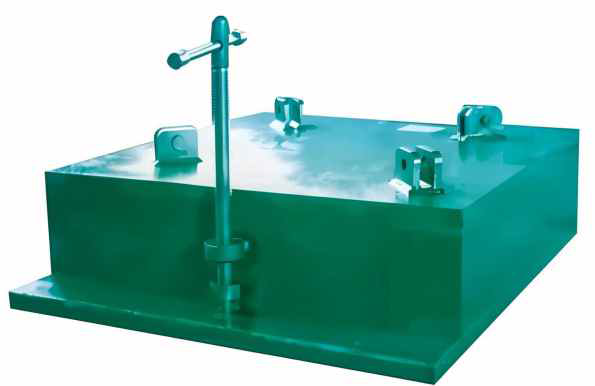
Choosing the right technology determines your operational reliability. Your application environment dictates the correct solution category. Suspended magnetic separator selection hinges on understanding these distinct trade-offs.
Electromagnetic units generate massive, deep-reaching fields. They excel in the most punishing heavy-industry applications.
Permanent magnets utilize fixed magnetic blocks. They offer extreme reliability without electrical dependence.
Where you place the magnet matters just as much as its strength. Geometry heavily influences extraction efficiency. Poor positioning wastes capital and structural load capacity.
Cross-belt installations span across the width of a flat conveyor section. They pull tramp metal up and discharge it to the side.
Inline installations sit directly parallel to the belt flow. They mount over the discharge head pulley.
Many facilities ignore structural interaction. You must install non-magnetic idlers directly under the separator zone. Standard steel idlers cause massive problems. The powerful magnetic field magnetizes them. This draws the conveyor belt violently upward. The friction destroys the belt rapidly. We recommend installing stainless steel idlers for at least five feet before and after the magnetic zone.
Every industry approaches magnetic separation differently. Your unique regulatory and mechanical environment dictates the final choice.
Different sectors face distinct operational threats. You must align your selection with these specific risks.
Follow this rigid sequence to avoid costly specification errors. Do not skip any steps.
| Application Parameter | Permanent Magnet | Electromagnetic Unit |
|---|---|---|
| Power Availability | Zero Power Required | Continuous Power Needed |
| Belt Speed | Standard (<400 FPM) | High-Speed (>400 FPM) |
| Burden Depth | Shallow to Moderate | Very Deep Burden |
| Maintenance Level | Low (Zero Cooling Systems) | High (Oil/Air Cooling checks) |
Suspended magnetic separator selection requires strict engineering discipline. It never functions as a generalized catalog purchase. You must calculate belt speed, burden depth, and suspension gaps meticulously. Remember that over-specifying wastes capital and stresses your structural load capacity unnecessarily. Conversely, under-specifying guarantees severe downstream equipment damage. Always match your installation geometry to your technological capabilities. We strongly encourage buyers to consult directly with application engineers. Provide them with exact FPM, precise burden depth, and accurate material density data. This data enables highly accurate magnetic modeling for your facility.
A: Faster conveyor speeds drastically reduce the dwell time tramp iron spends under the magnet. To compensate, faster speeds require longer magnetic profiles. A larger footprint maintains sufficient dwell time, allowing the magnetic field to overcome the forward momentum of the tramp iron effectively.
A: Yes, you can. However, the burden depth must remain relatively shallow. The target tramp iron must also be highly magnetically susceptible. Deep burdens paired with high speeds generally mandate the massive gradient reach of electromagnetic units.
A: Most operators fail to account for belt sag and surge loads. They forget the clearance required for self-cleaning belt cleats. If you measure too tightly, surge materials physically knock captured tramp metal back into the product stream.
A: This usually stems from mechanical entrapment. Heavy product pins the iron down, and the magnet pulls both up together. Occasionally, the primary product contains trace magnetic properties. You must adjust your suspension height or add a secondary separation stage.