Views: 0 Author: Site Editor Publish Time: 2026-08-14 Origin: Site


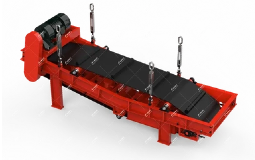
In industrial processing, material purity is never a minor detail. It directly affects product quality, production stability, equipment life, and operating cost. From our perspective as an industry-focused enterprise, one of the most effective ways to improve purity is to remove unwanted iron and magnetic contaminants before they cause larger problems in the production line. That is where a magnetic separator becomes highly valuable.
Whether the material is mineral ore, industrial powder, recycled raw material, or bulk feedstock, contamination can enter the process in many ways. It may come from the raw material itself, from crushing and conveying equipment, from storage, or from wear in upstream machinery. Once these impurities mix into the material stream, they can reduce product grade, interfere with processing, damage equipment, and increase maintenance pressure. A well-designed magnetic separator helps solve this issue by removing magnetic contaminants in a controlled and efficient way.
Material purity influences almost every stage of industrial production. When raw materials contain unwanted iron particles or magnetic impurities, the negative effects are often wider than expected. In some cases, contamination lowers the quality of the finished product. In other cases, it creates equipment wear, unstable processing conditions, and unnecessary downtime.
For example, in mineral processing, poor impurity control can reduce concentrate quality and weaken the value of the final product. In non-metallic mineral applications, residual iron may affect brightness, color, chemical properties, or market acceptance. In bulk material handling, tramp iron can damage crushers, grinders, screens, and conveyors. Even a small amount of contamination may become expensive if it causes rejects, rework, shutdowns, or performance loss.
That is why magnetic separation should not be viewed as only a cleanup step. In many industries, it is a key part of process control. It helps protect both material quality and operational reliability.
A magnetic separator uses magnetic force to attract and remove magnetic substances from a material stream. The basic purpose is simple: separate unwanted magnetic particles from valuable material as efficiently as possible.
When contaminated material moves through or near a magnetic field, ferrous and weakly magnetic particles respond differently from non-magnetic material. The separator captures those magnetic particles while allowing cleaner material to continue through the process. Depending on the application, the separator may be used for rough iron removal, fine purification, concentration improvement, or protection of downstream equipment.
This is what makes magnetic separation so useful in industry. It does not only remove visible metal pieces. It can also remove much smaller ferrous particles and weak magnetic impurities that would otherwise remain in the material and reduce final quality.
The purity improvement created by a magnetic separator is practical and measurable. It supports cleaner input, cleaner processing, and cleaner output.
One of the main advantages of a magnetic separator is early contamination control. Once iron particles move deeper into the production line, they become harder to remove and more likely to spread through larger volumes of material. By separating them earlier, the plant can prevent small contamination from turning into a broader quality problem.
This is especially useful when raw material quality varies from batch to batch. A magnetic separator acts as a stable protection point in the process, helping maintain cleaner feed even when incoming material is less consistent.
Cleaner feed leads to cleaner finished products. In mineral and powder processing, lower iron content can improve purity, color, and application performance. In beneficiation and refining operations, magnetic separation can improve concentrate grade or remove unwanted magnetic fractions from valuable material streams.
This becomes especially important in industries where product specifications are strict. In these cases, a separator contributes directly to product value, not only to equipment protection.
Impurities do not only affect the final product. They also interfere with downstream operations. Magnetic contamination can disrupt grinding efficiency, block material flow, reduce classification accuracy, damage process equipment, or create inconsistency in heating and forming stages.
By removing these impurities earlier, a magnetic separator helps create a more stable operating condition for the rest of the line. This often improves process consistency, reduces maintenance frequency, and makes quality control easier.
Not all magnetic separators perform the same way. The ability to improve material purity depends on equipment design, magnetic strength, adaptability, and reliability.
Deep magnetic penetration is important because contaminants are not always sitting on the surface of the material stream. In thick bulk layers or slurry systems, the magnetic field needs to reach deeply enough to influence particles below the top layer. A stronger and better-distributed magnetic field improves the chance of capturing more contaminants in one pass.
This is a major reason why separator design matters. Good magnetic penetration makes the equipment more effective in real plant conditions, not just in theory.
Industrial contaminants are often small, irregular, or only weakly magnetic. Some particles are easy to remove, but others are more difficult because they are fine, mixed tightly with the material, or buried within the flow. Strong magnetic attraction helps the separator capture these harder-to-remove impurities more effectively.
This directly improves separation efficiency and helps plants achieve better purification results with less repeated handling.
Industrial production lines rarely process one perfectly stable material. Feed may be wet or dry, coarse or fine, high-grade or low-grade, and sometimes highly variable from one batch to another. A practical magnetic separator should adapt to these conditions instead of working well only in narrow circumstances.
This adaptability is one of the most important features for real-world use. Equipment that can handle feed fluctuation more effectively will provide more consistent purity improvement over time.
A separator creates value only when it performs consistently. In continuous production environments, reliability is critical. Even a high-performance separator loses value if it causes frequent stoppages or unstable operation.
That is why reliable structure, good cooling performance, durable components, and stable magnetic performance are so important. Plants need equipment that supports day-to-day production, not equipment that performs well only under ideal conditions.
Energy cost is part of nearly every industrial equipment decision today. A magnetic separator should not only improve purity, but also do so efficiently. Better system design can reduce unnecessary power use while maintaining strong separation performance.
For many plants, this balance between purification effect and operating cost is a major part of equipment evaluation.
Feature | What It Does | Purity Benefit |
Deep magnetic penetration | Extends magnetic influence deeper into the material stream | Captures more hidden contaminants |
Strong magnetic attraction | Pulls ferrous and weak magnetic particles more effectively | Improves contaminant removal efficiency |
Adaptability to feed changes | Handles different sizes, grades, and concentrations | Maintains stable purification results |
Reliable operation | Supports continuous production with fewer interruptions | Protects long-term purity control |
Low energy consumption | Reduces power demand during operation | Improves cost-effectiveness |
Fine impurity removal capability | Separates smaller magnetic particles | Produces cleaner final material |
Equipment protection function | Removes tramp iron before it reaches downstream machines | Prevents contamination and mechanical damage |
Process matching flexibility | Fits different industrial applications and material types | Improves overall separation performance |
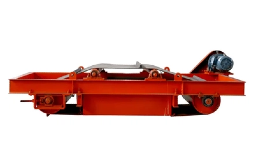
A magnetic separator can improve material purity in many industries, but its value is especially clear where contamination directly affects product performance or processing safety.
In mineral processing, magnetic separation can be used to recover magnetic minerals, reject unwanted magnetic material, or improve concentrate quality. This helps plants increase product value while reducing impurity-related losses.
In non-metallic minerals, iron contamination often affects product appearance and application performance. Magnetic separation helps reduce iron content and improve whiteness, cleanliness, and market acceptance.
In recycling systems and bulk raw material handling, tramp iron is a common problem. Magnetic separators help remove this contamination before it damages equipment or lowers raw material quality. This makes the process safer, cleaner, and more stable.
Fine powders are often more difficult to purify because contaminants are smaller and more closely mixed with the product. A properly selected magnetic separator can improve purity in these applications by targeting even fine magnetic impurities.
Choosing the right magnetic separator is not only about selecting the strongest magnet. From our perspective, several factors should be considered together.
First, the separator must match the material. Wet and dry processes, coarse and fine particles, and different impurity levels all require different separation approaches.
Second, the plant should consider operating conditions. Feed variation, production volume, maintenance requirements, and energy consumption all influence what kind of separator will create the best practical value.
Third, reliability and service support matter. A separator is part of a production system, not a stand-alone device. Good technical support, reasonable maintenance requirements, and dependable performance are essential for long-term results.
Improving material purity through magnetic separation has both immediate and long-term value. In the short term, plants benefit from cleaner materials, better product quality, and reduced equipment risk. Over time, the benefits become even broader.
A cleaner process usually means fewer shutdowns, more stable production, lower maintenance costs, and better use of raw materials. It can also support stronger market competitiveness, especially in industries where quality standards are becoming more demanding.
This is why magnetic separation should be viewed as an investment in process performance rather than only a piece of auxiliary equipment. When applied properly, it improves the entire production chain.
A magnetic separator improves material purity in industrial processing by removing ferrous contaminants, reducing impurity-related quality problems, protecting downstream equipment, and supporting more stable production. Its value lies not only in separating visible metal, but also in capturing smaller and weaker magnetic impurities that would otherwise reduce product quality and process efficiency.
From our point of view, the real strength of a magnetic separator is its practical contribution to cleaner materials, more reliable operation, and better long-term production control. For companies that want to improve material purity and strengthen industrial processing performance, it is worth learning more about Hunan Zhongke Electric Co., Ltd. Their experience in magnetic separation equipment may provide useful support for plants seeking cleaner products and more efficient operations.
Q: How does a magnetic separator improve material purity in industrial processing?
A: It improves material purity by removing ferrous and magnetic contaminants from the material stream, helping create cleaner raw materials and better final product quality.
Q: Why is magnetic separation important for industrial processing equipment?
A: Magnetic separation is important because it protects downstream equipment from tramp iron, reduces wear, and supports more stable processing conditions.
Q: What materials can benefit from a magnetic separator?
A: Materials such as mineral ores, non-metallic minerals, powders, recycled feed, and bulk industrial raw materials can all benefit from magnetic separation.
Q: What should companies consider when choosing a magnetic separator?
A: Companies should consider material type, impurity level, feed condition, separator reliability, energy consumption, and how well the equipment matches the actual processing line.